
Floods and surface water
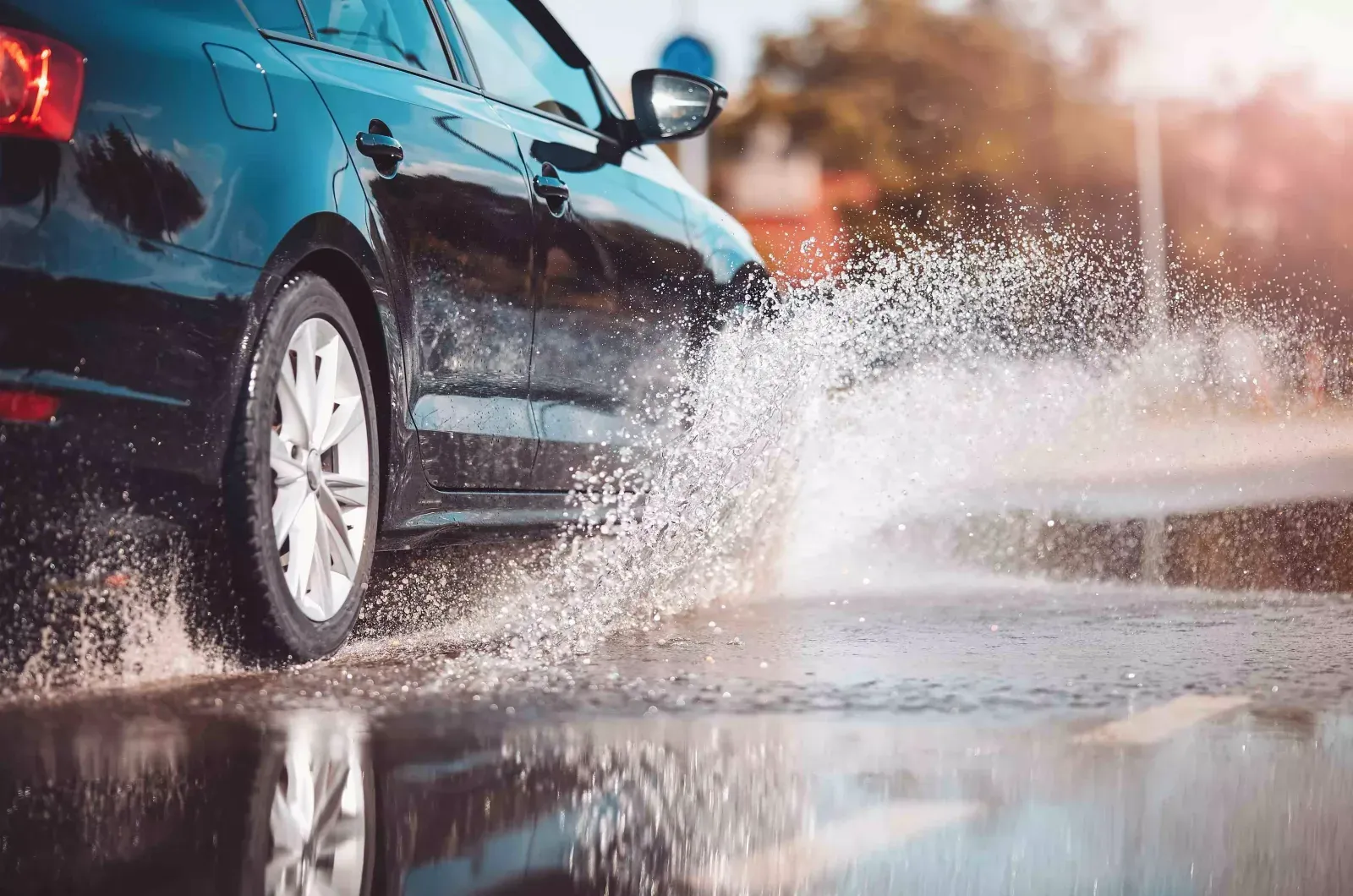
Floods and standing water are common on UK roads, especially after heavy rain. Driving through them without care can be dangerous: for you, your car, and other road users.
Prevention is best
- Plan ahead: look well down the road and spot potential water hazards early.
- Choose your route carefully: if you know an area is prone to flooding, avoid it if possible.
How to drive through water safely
- Slow and steady: approach at around 3 to 4 mph. This avoids creating a bow wave that could flood your engine.
- Keep moving: use slightly higher revs than usual and maintain steady progress to prevent stalling.
- Stay shallow: drive through the shallowest part of the road, usually the crown in the middle where the cambers meet.
- Brake test: once safely through, gently apply your brakes to dry them out.
Slow down, don’t splash
Simply reducing your speed when approaching standing water is the easiest way to stay in control, protect your car, and avoid splashing pedestrians. Did you know? Deliberately soaking someone by driving through water can be an offence under the Road Traffic Act 1988.
The law and penalties
Driving “without reasonable consideration for other persons” (section 3 of the Road Traffic Act 1988) includes splashing pedestrians; the Crown Prosecution Service specifically lists it as an example. A fixed penalty notice carries a £100 fine and 3 penalty points; serious cases can go to court with fines up to £5,000 and up to 9 penalty points.
How it’s enforced
- Evidence matters: dashcams, smartphones, and CCTV can all be used, and pedestrians are encouraged to report incidents.
- Intent counts: accidents happen, but swerving or speeding to splash deliberately can lead to prosecution.
If you’ve got any questions about learning to drive, I’m always happy to help, even if you don’t train with me.
Get in touch